Executive summary
The unit of progress has changed.
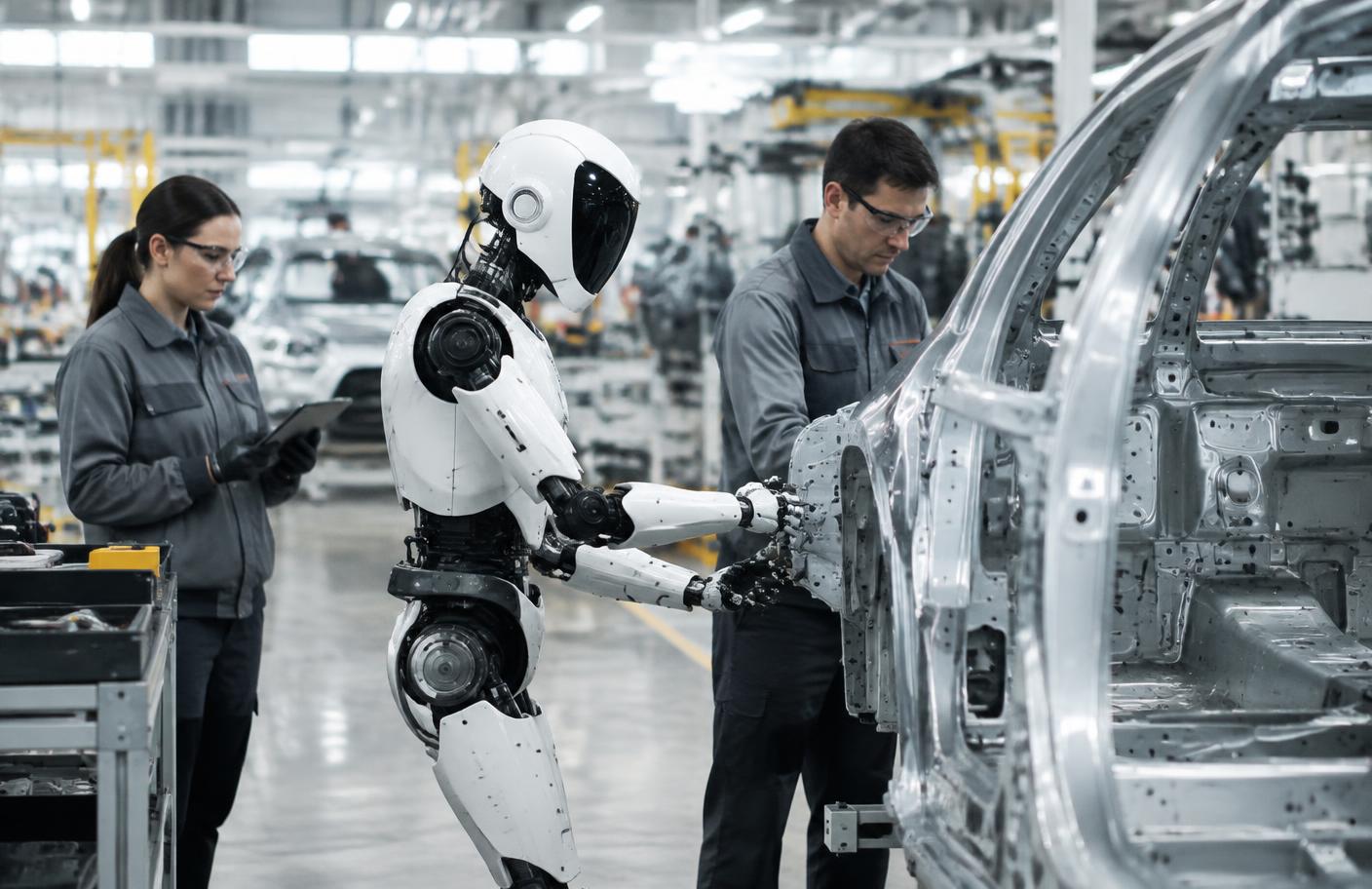
The public demonstration asks whether a robot can complete a task once. Deployment asks whether an entire operating system can complete it safely, recover from variation, and produce useful work across a shift.
That shift changes what matters. Mechanical capability remains essential, but integration depth, supervision burden, serviceability, data operations, and the economics of failure now sit beside it.
Evidence rail
Preview framework; verify against primary sources.
What changed
From isolated capability to coordinated performance
Developers are increasingly framing pilots around repeatable workflows rather than broad autonomy. A useful deployment system combines task planning, perception, manipulation, safety controls, charging, fleet oversight, and a clear path for human intervention.
| Layer | Demo signal | Deployment signal |
|---|---|---|
| Task | Completion | Repeatability across variance |
| Operations | Operator nearby | Defined intervention rate |
| Hardware | Peak capability | Service interval and recovery |
| Economics | Unit prototype | Useful output per supervised hour |
Preview / example criteria, not reported performance data.
“The decisive question is no longer whether a humanoid can perform the motion. It is whether the surrounding system makes that motion dependable.”
Why it matters
Deployment reveals the hidden work
Factories and warehouses make variability visible. Parts arrive out of position. Work cells change. Networks fail. People enter the operating envelope. The robot’s value depends on how gracefully the complete system handles those conditions.
What remains uncertain
The evidence is still uneven.
Public material rarely exposes comparable definitions for intervention, uptime, cycle time, or task boundaries. Announced partnerships are not the same as durable production use, and pilot counts do not establish economic value.
A credible view therefore separates observed capability, company-stated targets, active trials, and independently supported deployment evidence.
HH View
Watch the operating system around the machine.
The strongest signal will not be another cinematic demonstration. It will be evidence that integrators can define a workflow, operators can supervise it efficiently, maintenance teams can restore it quickly, and customers choose to expand it.
Sources
Evidence notes
- Company technical materials and deployment announcements.
- Peer-reviewed and preprint robotics research.
- Public statements from integrators and prospective operators.
This prototype uses neutral editorial placeholders and does not present the framework above as verified company performance.